Buy gunfactory.eu ?
We are moving the project
gunfactory.eu .
Are you interested in purchasing the domain
gunfactory.eu ?
domain@kv-gmbh.de · 0541-91531010
Buy gunfactory.eu ?
'Will + participle 2?'
"Will + participle 2" is a construction used to form the future perfect tense in English. It is used to indicate an action that will be completed before a specific point in the future. This construction is formed by using the auxiliary verb "will" followed by the past participle of the main verb. For example, "By the time you arrive, I will have finished my homework." **
What are the Latin forms of the present participle, perfect passive participle, and future active participle?
The Latin present participle is formed by adding -ns, -ntis to the present stem of the verb. For example, the present participle of the verb "amo" (I love) is "amans, amantis" (loving). The perfect passive participle is formed by adding -us, -a, -um to the verb stem. For example, the perfect passive participle of the verb "amo" is "amatus, amata, amatum" (loved). The future active participle is formed by adding -urus, -ura, -urum to the verb stem. For example, the future active participle of the verb "amo" is "amaturus, amatura, amaturum" (about to love). **

Similar search terms for Participle
Top-Angebote
Products related to Participle:
-
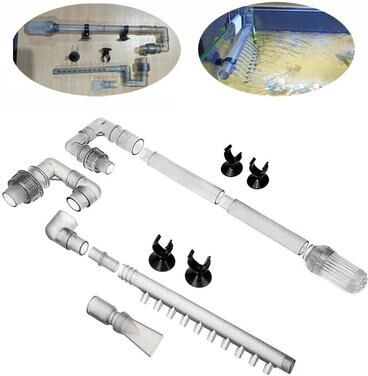
Happy Pet Pantry Aquarium Filter External Canister Parts: Water Inflow Outflow Tube Accessories 2Water Inflow Outflow Tube Pipe Aquarium Filter External Canister Parts Tank Water Tube Inlet Outlet Accessories 100% brand new and high quality.Help to adjust the water flow direction.Fit for HW603B602B and Eheim 250300600.Suitable for filters with...24,97 $*Shipping: 0,00 $Secure redirect to the provider
-
Uplift Essentials Smart Self Cleaning Litter Box Replacement Accessories & Maintenance Parts q clean matKeep your automated pet care system running at peak performance with our specialized automatic litter box accessories collection. Maintaining a clean and hygienic environment for your cat is essential, and these precision components are designed to...86,97 $*Shipping: 0,00 $Secure redirect to the provider
-
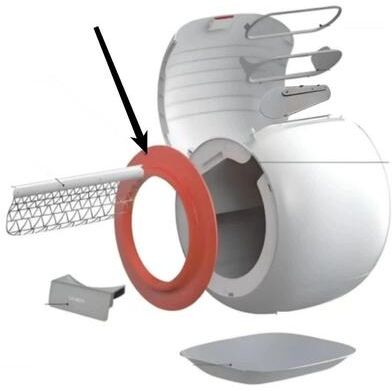
Uplift Picks TONEPIE Q Clean Cat Litter Box Accessories And Replacement Parts matKeep your smart litter box working cleaner, smoother, and more comfortably for your cat. These cat litter box accessories are made for the TONEPIE Q Clean system and include replacement options such as mats, filter mesh, bucket rings, anti sand...200,00 $*Shipping: 0,00 $Secure redirect to the provider
-
Uplift Picks TONEPIE Q Clean Cat Litter Box Accessories And Replacement Parts oKeep your smart litter box working cleaner, smoother, and more comfortably for your cat. These cat litter box accessories are made for the TONEPIE Q Clean system and include replacement options such as mats, filter mesh, bucket rings, anti sand...110,00 $*Shipping: 0,00 $Secure redirect to the provider

-
What are participle clauses?
Participle clauses are a type of clause that uses a present participle (-ing form) or a past participle (-ed form) to provide additional information about the subject of the main clause. They can be used to show simultaneous actions, cause and effect, or to provide descriptive details. For example, in the sentence "Feeling tired, she decided to go to bed," the participle clause "Feeling tired" provides additional information about the subject "she." **
-
What is a participle?
A participle is a form of a verb that can function as an adjective or be part of a verb phrase. There are two types of participles in English: the present participle, which ends in -ing (e.g. "walking"), and the past participle, which can end in -ed, -en, -d, -t, -n, or -ne (e.g. "broken"). Participles are used to modify nouns or pronouns, and they can also be used to form verb tenses such as the present perfect or past perfect. **
-
What is the difference between the past participle and the present participle?
The past participle is a verb form used to indicate a completed action or state that occurred in the past. It is often used with auxiliary verbs to form the perfect tenses (e.g., "has eaten," "had gone"). The present participle, on the other hand, is a verb form used to indicate an ongoing action or state in the present or future. It is formed by adding "-ing" to the base form of the verb and is used to create the progressive tenses (e.g., "is eating," "will be going"). **
-
How can the terms premature, simultaneous, and subsequent be explained in relation to past participle, present participle, and future participle?
The terms premature, simultaneous, and subsequent can be explained in relation to past participle, present participle, and future participle based on their timing in relation to the action of the verb. The past participle refers to an action that has already been completed, making it premature in relation to the present moment. The present participle refers to an action that is happening at the same time as something else, making it simultaneous. The future participle refers to an action that will happen at a later time, making it subsequent to the present moment. These terms help to clarify the timing of the action in relation to the verb. **

What is a nominalized participle?
A nominalized participle is a verb form that has been turned into a noun. This is done by adding a suffix to the participle form of the verb, which allows it to function as a noun in a sentence. Nominalized participles are commonly used in various languages to express actions or qualities in a more abstract or general way. **
What is a substantivized participle?
A substantivized participle is a verb form that has been turned into a noun by adding a definite article and declining it for case, gender, and number. In other words, it is a participle that has been transformed into a noun and can function as a subject, object, or complement in a sentence. This process allows the participle to take on the characteristics of a noun while still retaining some of its verbal qualities. **
Top-Angebote
Products related to Participle:
-
Burgon & Ball RHS Flora & Fauna Pruner & Holster Set This RHS Flora & Fauna pruner and holster set combines dependable cutting performance with decorative botanical detail, making it a thoughtful and practical gardening gift. The pruner is endorsed by the Royal Horticultural Society and designed for long‑lasting use. Lightweight alloy handles are paired with a hardened, tempered high‑carbon steel blade to deliver clean, precise cuts. Finished with blue handles that complement the Flora & Fauna design, the pruner is comfortable to use and carries a reassuring ten‑year guarantee. The matching neoprene holster features the vibrant Flora & Fauna pattern and is designed to be worn on a belt, keeping the pruner close to hand while gardening. The set is presented in a plastic‑free, fully recyclable pull‑out gift box, with engineered cardboard securing both items neatly in place. The Flora & Fauna design showcases elegant birds and delicate foliage drawn from historic illustrations in the RHS Lindley Collections, including Chinese watercolours and hand‑coloured engravings dating from 1819–1912. Designed by Burgon & Ball as part of the RHS Gifts for Gardeners collection. Pruner length: 17cm. Pruner weight: 0.16kg. Holster length: 19cm. Knives are not for sale to persons under the age of 18. - all knives and bladed products are delivered by Age Verified Delivery (AVD). The carrier may request proof of age in order to deliver your parcel. If proof of age is not available, or the recipient is underage, the carrier will refuse to deliver.20,69 £*Shipping: 3,50 £Secure redirect to the provider
-
Uplift Picks TONEPIE Q Clean Cat Litter Box Accessories And Replacement Parts doorKeep your smart litter box working cleaner, smoother, and more comfortably for your cat. These cat litter box accessories are made for the TONEPIE Q Clean system and include replacement options such as mats, filter mesh, bucket rings, anti sand...110,00 $*Shipping: 0,00 $Secure redirect to the provider
-
Happy Pet Pantry Aquarium Filter External Canister Parts: Water Inflow Outflow Tube Accessories 2Water Inflow Outflow Tube Pipe Aquarium Filter External Canister Parts Tank Water Tube Inlet Outlet Accessories 100% brand new and high quality.Help to adjust the water flow direction.Fit for HW603B602B and Eheim 250300600.Suitable for filters with...24,97 $*Shipping: 0,00 $Secure redirect to the provider
-
Uplift Essentials Smart Self Cleaning Litter Box Replacement Accessories & Maintenance Parts q clean matKeep your automated pet care system running at peak performance with our specialized automatic litter box accessories collection. Maintaining a clean and hygienic environment for your cat is essential, and these precision components are designed to...86,97 $*Shipping: 0,00 $Secure redirect to the provider
-
'Will + participle 2?'
"Will + participle 2" is a construction used to form the future perfect tense in English. It is used to indicate an action that will be completed before a specific point in the future. This construction is formed by using the auxiliary verb "will" followed by the past participle of the main verb. For example, "By the time you arrive, I will have finished my homework." **
-
What are the Latin forms of the present participle, perfect passive participle, and future active participle?
The Latin present participle is formed by adding -ns, -ntis to the present stem of the verb. For example, the present participle of the verb "amo" (I love) is "amans, amantis" (loving). The perfect passive participle is formed by adding -us, -a, -um to the verb stem. For example, the perfect passive participle of the verb "amo" is "amatus, amata, amatum" (loved). The future active participle is formed by adding -urus, -ura, -urum to the verb stem. For example, the future active participle of the verb "amo" is "amaturus, amatura, amaturum" (about to love). **
-
What are participle clauses?
Participle clauses are a type of clause that uses a present participle (-ing form) or a past participle (-ed form) to provide additional information about the subject of the main clause. They can be used to show simultaneous actions, cause and effect, or to provide descriptive details. For example, in the sentence "Feeling tired, she decided to go to bed," the participle clause "Feeling tired" provides additional information about the subject "she." **
-
What is a participle?
A participle is a form of a verb that can function as an adjective or be part of a verb phrase. There are two types of participles in English: the present participle, which ends in -ing (e.g. "walking"), and the past participle, which can end in -ed, -en, -d, -t, -n, or -ne (e.g. "broken"). Participles are used to modify nouns or pronouns, and they can also be used to form verb tenses such as the present perfect or past perfect. **
Similar search terms for Participle
-
Uplift Picks TONEPIE Q Clean Cat Litter Box Accessories And Replacement Parts matKeep your smart litter box working cleaner, smoother, and more comfortably for your cat. These cat litter box accessories are made for the TONEPIE Q Clean system and include replacement options such as mats, filter mesh, bucket rings, anti sand...200,00 $*Shipping: 0,00 $Secure redirect to the provider
-
Uplift Picks TONEPIE Q Clean Cat Litter Box Accessories And Replacement Parts oKeep your smart litter box working cleaner, smoother, and more comfortably for your cat. These cat litter box accessories are made for the TONEPIE Q Clean system and include replacement options such as mats, filter mesh, bucket rings, anti sand...110,00 $*Shipping: 0,00 $Secure redirect to the provider
-
Uplift Picks TONEPIE Q Clean Cat Litter Box Accessories And Replacement Parts frameKeep your smart litter box working cleaner, smoother, and more comfortably for your cat. These cat litter box accessories are made for the TONEPIE Q Clean system and include replacement options such as mats, filter mesh, bucket rings, anti sand...110,00 $*Shipping: 0,00 $Secure redirect to the provider
-
Uplift Picks TONEPIE Q Clean Cat Litter Box Accessories And Replacement Parts circleKeep your smart litter box working cleaner, smoother, and more comfortably for your cat. These cat litter box accessories are made for the TONEPIE Q Clean system and include replacement options such as mats, filter mesh, bucket rings, anti sand...200,00 $*Shipping: 0,00 $Secure redirect to the provider
-
What is the difference between the past participle and the present participle?
The past participle is a verb form used to indicate a completed action or state that occurred in the past. It is often used with auxiliary verbs to form the perfect tenses (e.g., "has eaten," "had gone"). The present participle, on the other hand, is a verb form used to indicate an ongoing action or state in the present or future. It is formed by adding "-ing" to the base form of the verb and is used to create the progressive tenses (e.g., "is eating," "will be going"). **
-
How can the terms premature, simultaneous, and subsequent be explained in relation to past participle, present participle, and future participle?
The terms premature, simultaneous, and subsequent can be explained in relation to past participle, present participle, and future participle based on their timing in relation to the action of the verb. The past participle refers to an action that has already been completed, making it premature in relation to the present moment. The present participle refers to an action that is happening at the same time as something else, making it simultaneous. The future participle refers to an action that will happen at a later time, making it subsequent to the present moment. These terms help to clarify the timing of the action in relation to the verb. **
-
What is a nominalized participle?
A nominalized participle is a verb form that has been turned into a noun. This is done by adding a suffix to the participle form of the verb, which allows it to function as a noun in a sentence. Nominalized participles are commonly used in various languages to express actions or qualities in a more abstract or general way. **
-
What is a substantivized participle?
A substantivized participle is a verb form that has been turned into a noun by adding a definite article and declining it for case, gender, and number. In other words, it is a participle that has been transformed into a noun and can function as a subject, object, or complement in a sentence. This process allows the participle to take on the characteristics of a noun while still retaining some of its verbal qualities. **
* All prices are inclusive of VAT and, if applicable, plus shipping costs. The offer information is based on the details provided by the respective shop and is updated through automated processes. Real-time updates do not occur, so deviations can occur in individual cases. ** Note: Parts of this content were created by AI.